

Set up your business
Everything on this page lives under Settings, which you open from your user menu at the bottom of the sidebar. Only the owner and admins can change business settings; other roles can view them.
Company profile
Section titled “Company profile”Settings → Business Profile holds what prints on your documents and drives numbering.
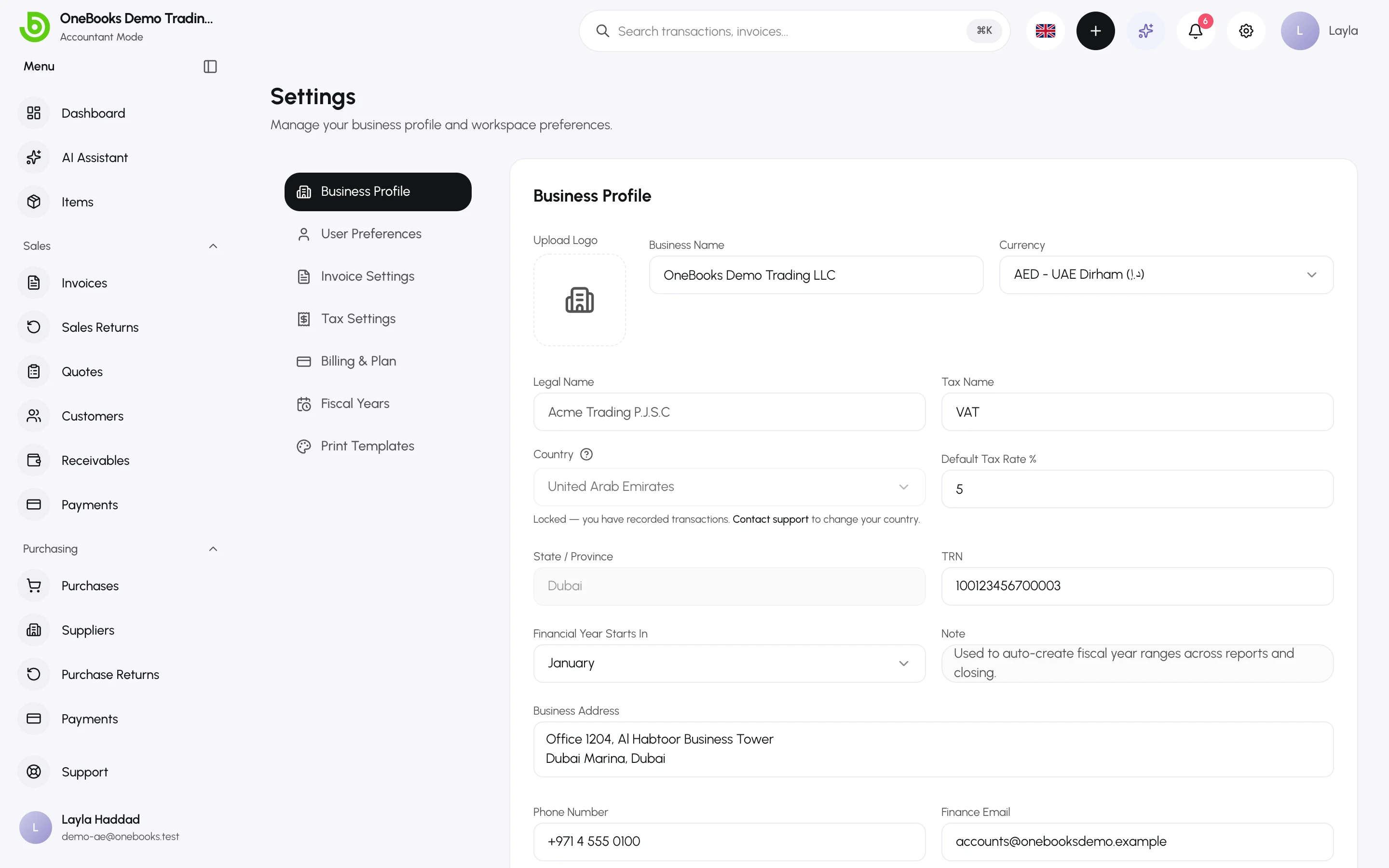
- Upload a logo — it appears on invoices, quotes and receipts.
- Enter the business name (what customers see) and, if different, the legal name.
- Check the tax name and tax ID (VAT number, TRN, GSTIN…). They print on every tax document.
- Set Financial year starts in — the month your fiscal year begins. Reports and year-end closing use it. See Fiscal years.
- Fill in the address, phone and email shown on documents.
- Set the default payment terms in days — new invoices get their due date from it.
- Select Save.
Tax settings
Section titled “Tax settings”Settings → Tax Settings decides how tax is calculated on every line you enter.
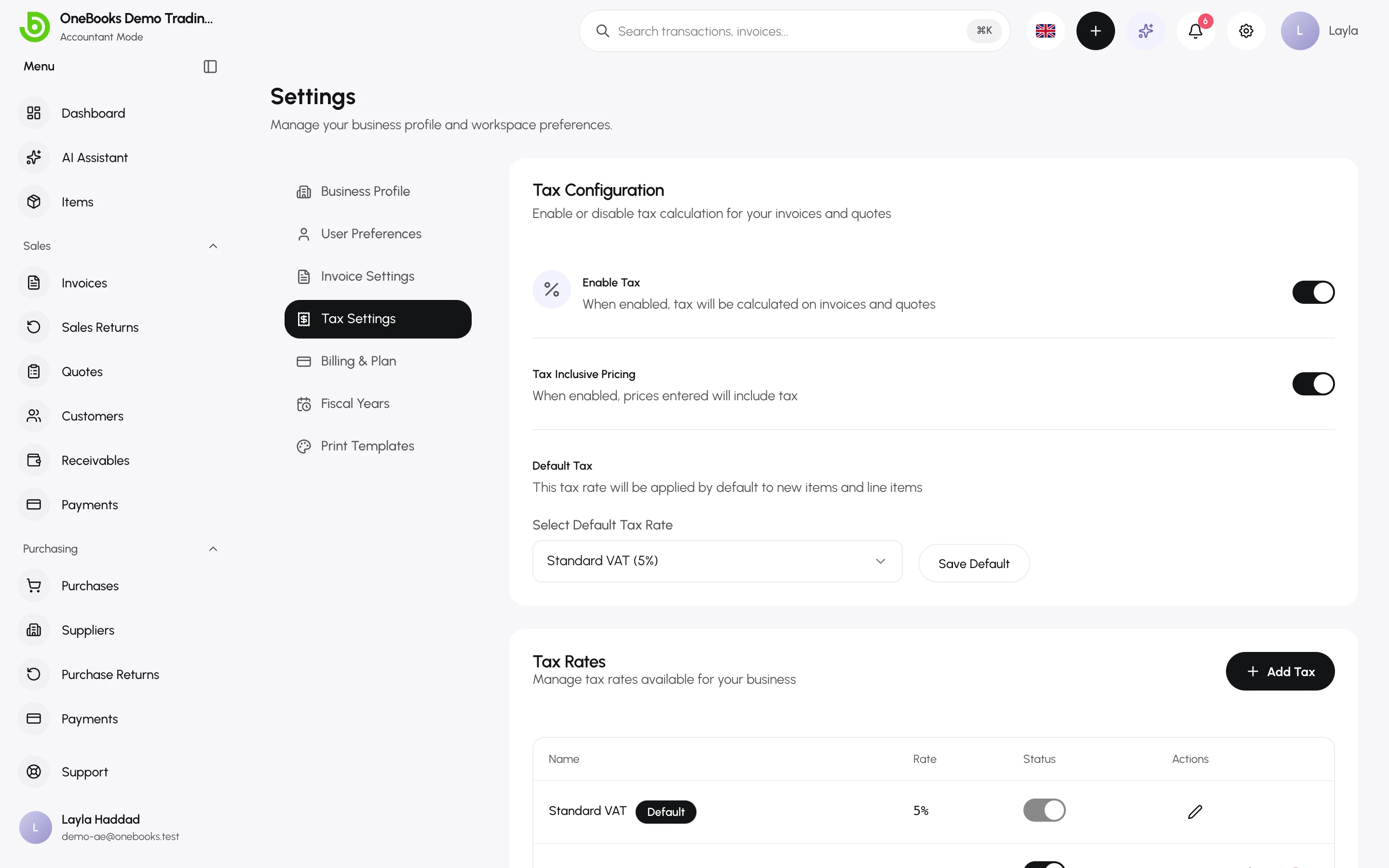
- Enable Tax — turn off only if your business is not tax-registered.
- Tax Inclusive Pricing — when on, the prices you type already include tax and OneBooks extracts it; when off, tax is added on top.
- Tax Rates — add the rates you use (standard, reduced, zero) and set the default applied to new items and lines.
Details: Tax settings.
Fiscal year
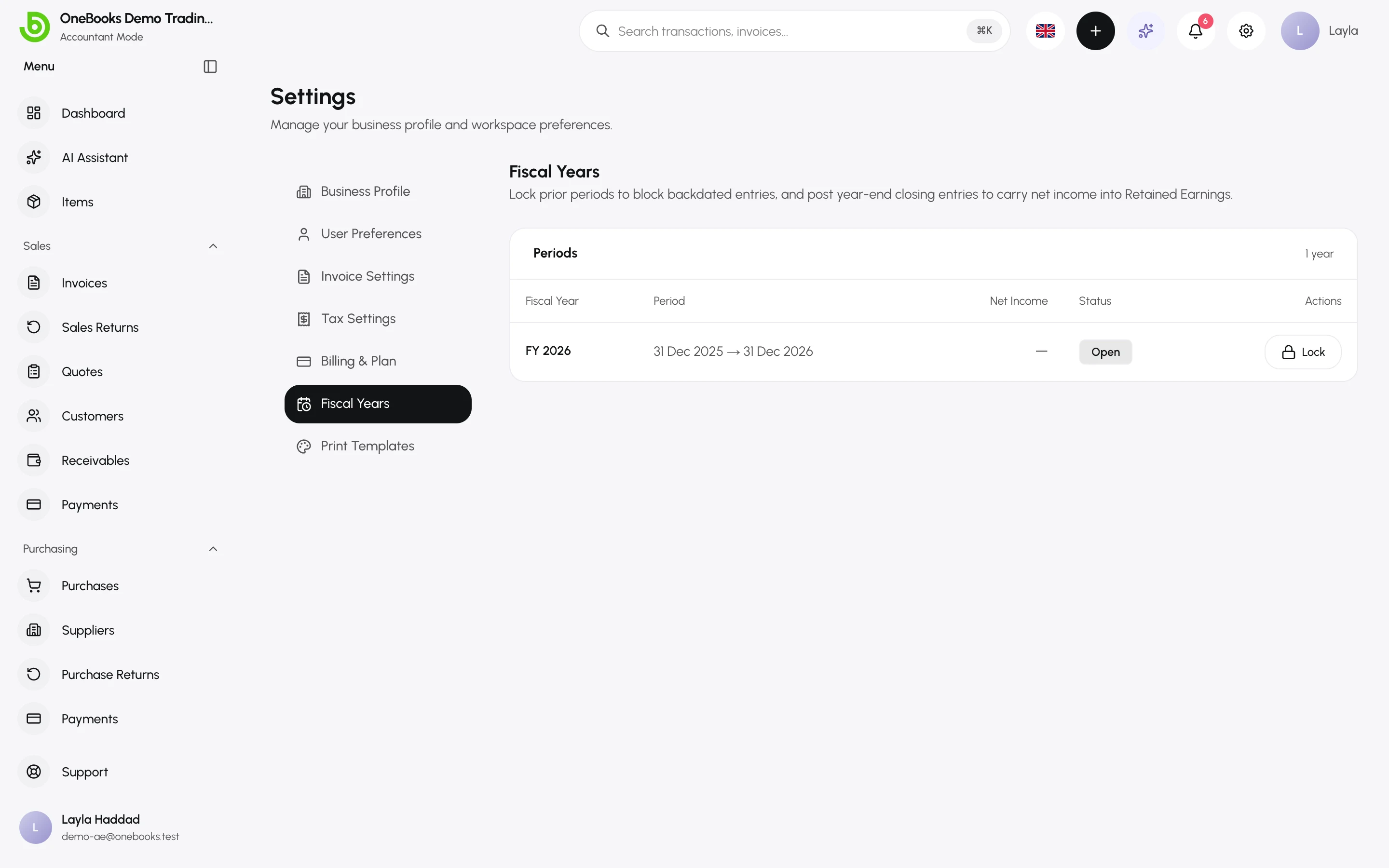
Section titled “Fiscal year”Settings → Fiscal Years lists your fiscal years with their status (Open, Locked, Closed). Nothing to do on day one — OneBooks creates the current year automatically — but this is where you will lock prior periods and run year-end closing later. See Fiscal years.
Preferences
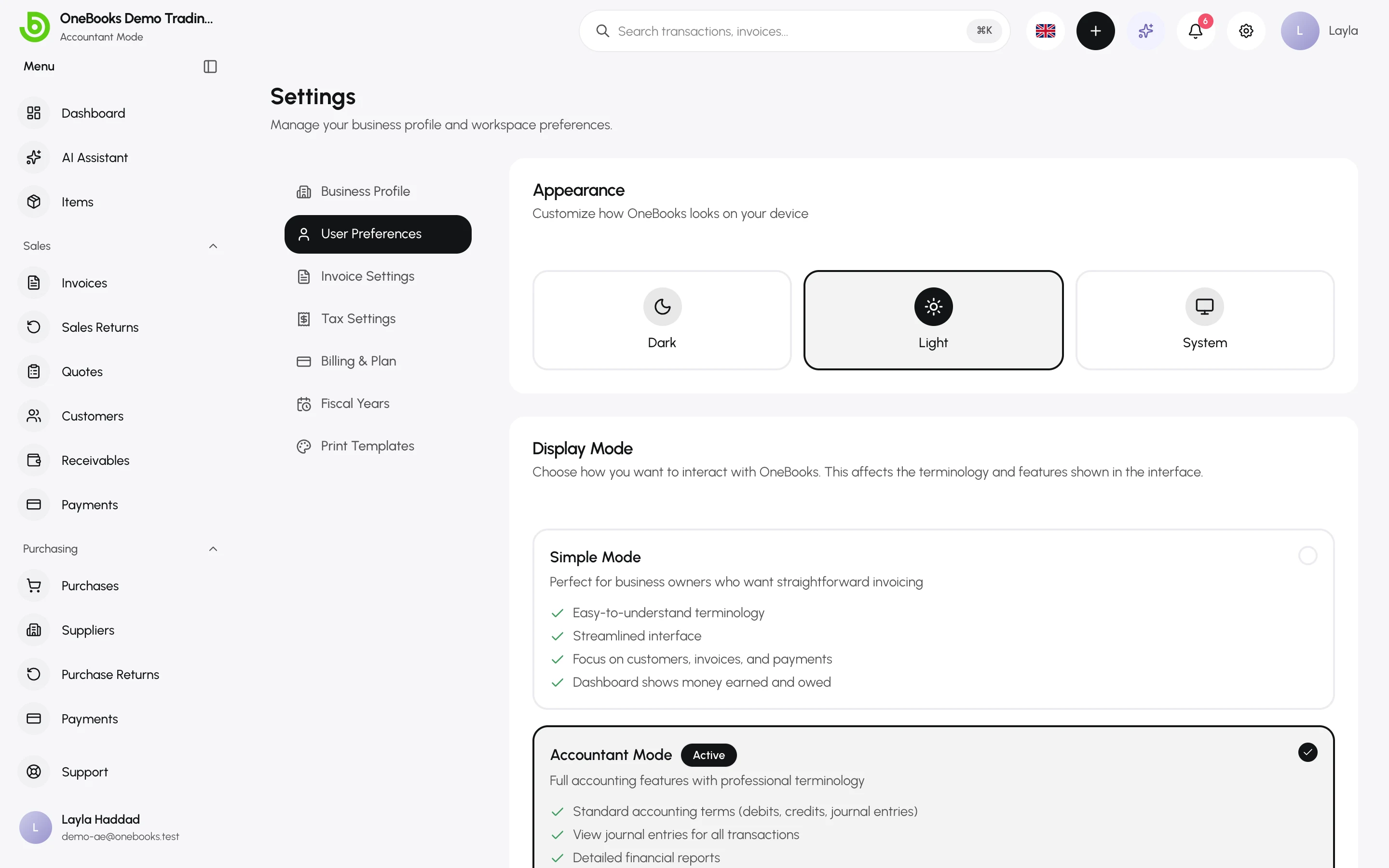
Section titled “Preferences”Settings → User Preferences is personal to each user: Display Mode (Simple or Accountant), Appearance (Light, Dark, System) and Language (English, Arabic, Spanish, French). See Simple mode vs Accountant mode and Preferences.
Recommended first-week checklist
Section titled “Recommended first-week checklist”- Add your items so invoices are consistent — Items catalog.
- Import customers and suppliers from a spreadsheet — Import and export.
- Enter opening balances if you are moving from another system — Opening balances.
- Invite your accountant with the Admin or Member role — Users and roles.
- Saudi Arabia: complete ZATCA onboarding before issuing tax invoices — Saudi Arabia.