

Receivables and payables aging
Aging reports split open balances by how long they have been outstanding — Current (not yet due), then increasingly overdue buckets — so you can chase the oldest debts first and plan payments.
Receivables aging
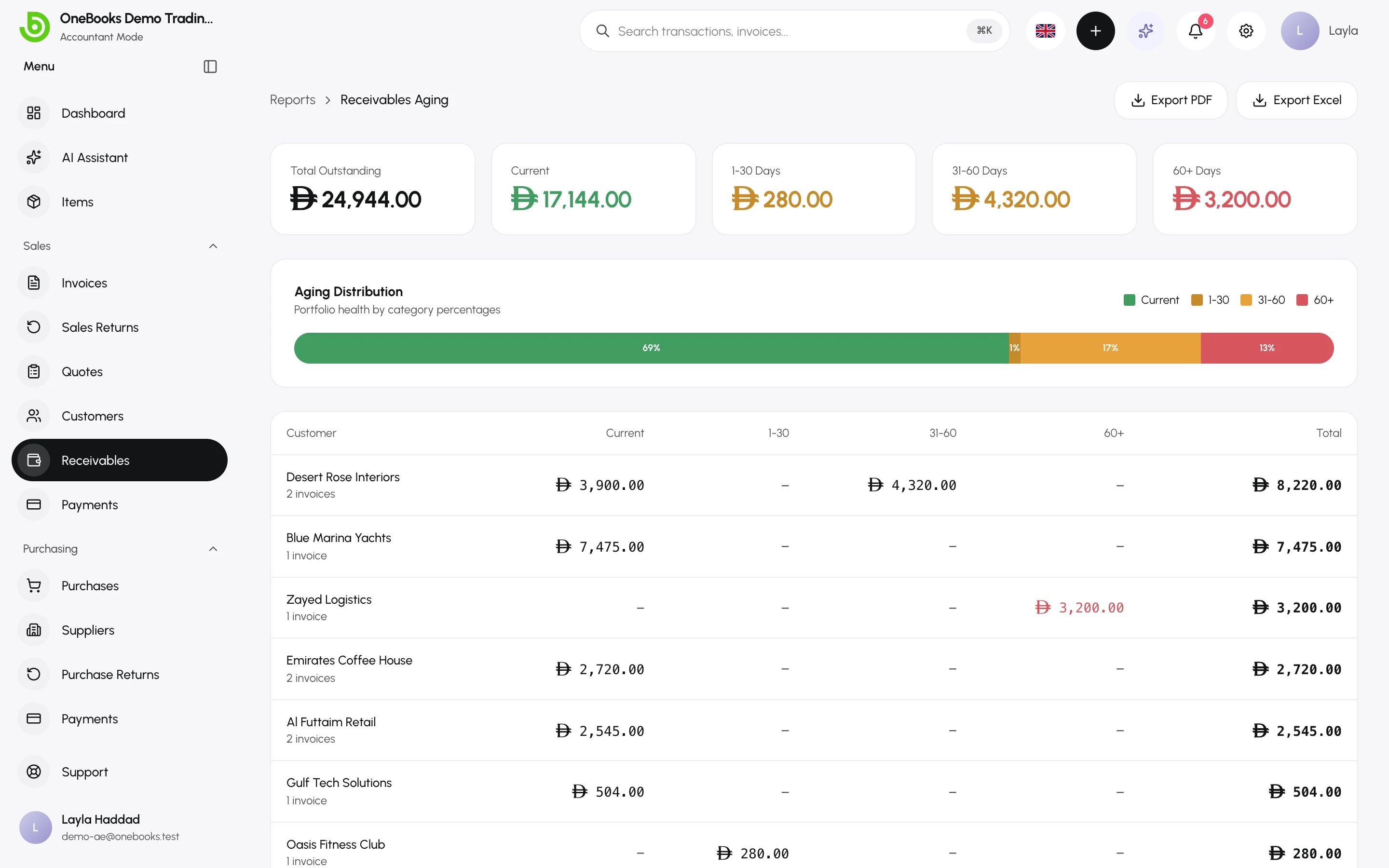
Section titled “Receivables aging”Sales → Receivables — one row per customer with the number of open invoices and the amount per bucket, a distribution chart and PDF/Excel export. Details: Receivables and aging.
Payables aging
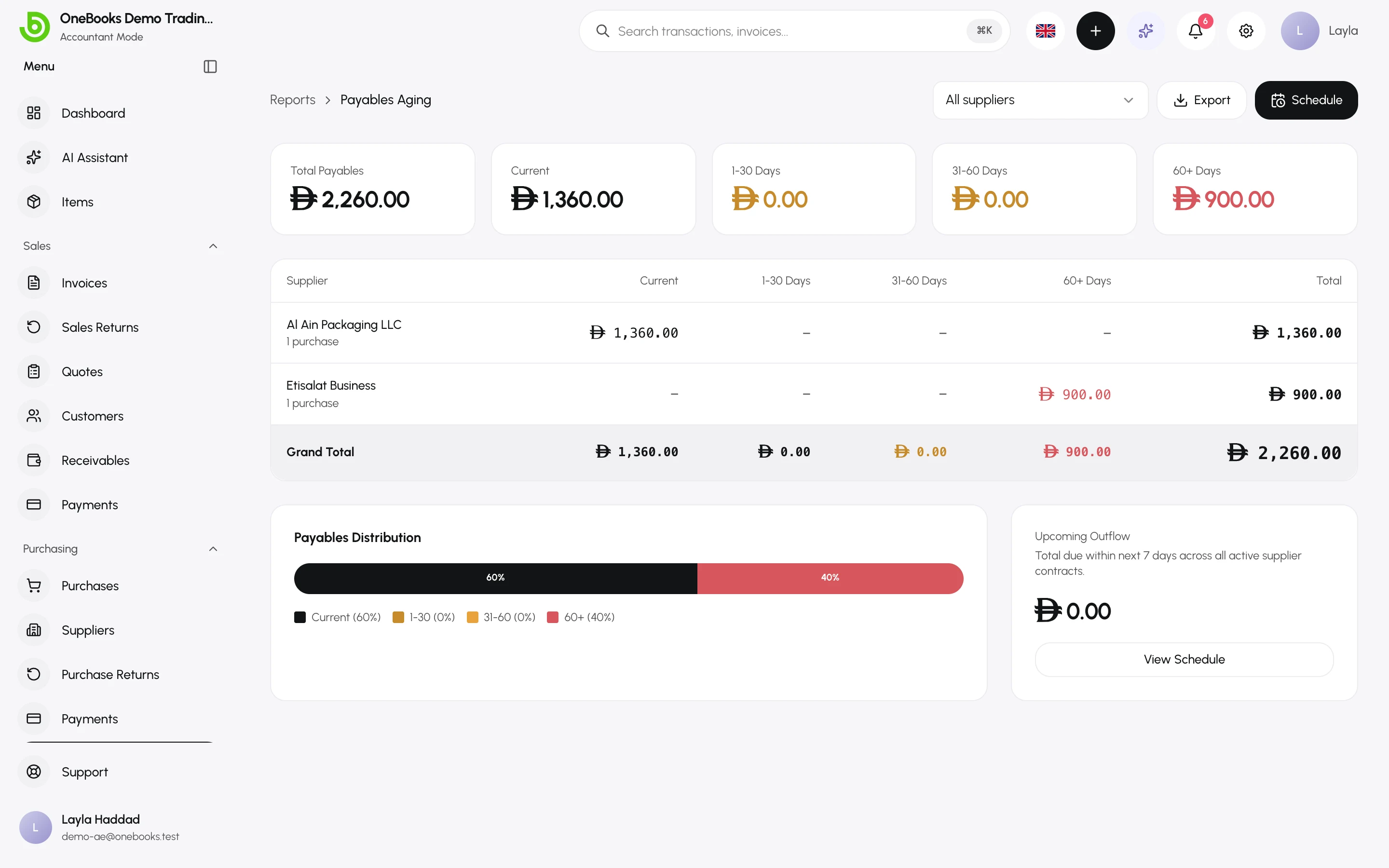
Section titled “Payables aging”Purchasing → Payables — one row per supplier, a distribution chart, and the upcoming outflow due in the next seven days. Details: Payables and aging.
How the buckets are calculated
Section titled “How the buckets are calculated”Age is counted from the document’s due date, not its issue date, so an invoice on 30-day terms is Current until day 30. Partially paid documents show only the remaining balance.
Tying to the balance sheet
Section titled “Tying to the balance sheet”The receivables total equals the balance of 1100 Accounts Receivable, and the payables total equals 2000 Accounts Payable, on the balance sheet as of today — both are built from the same postings.